

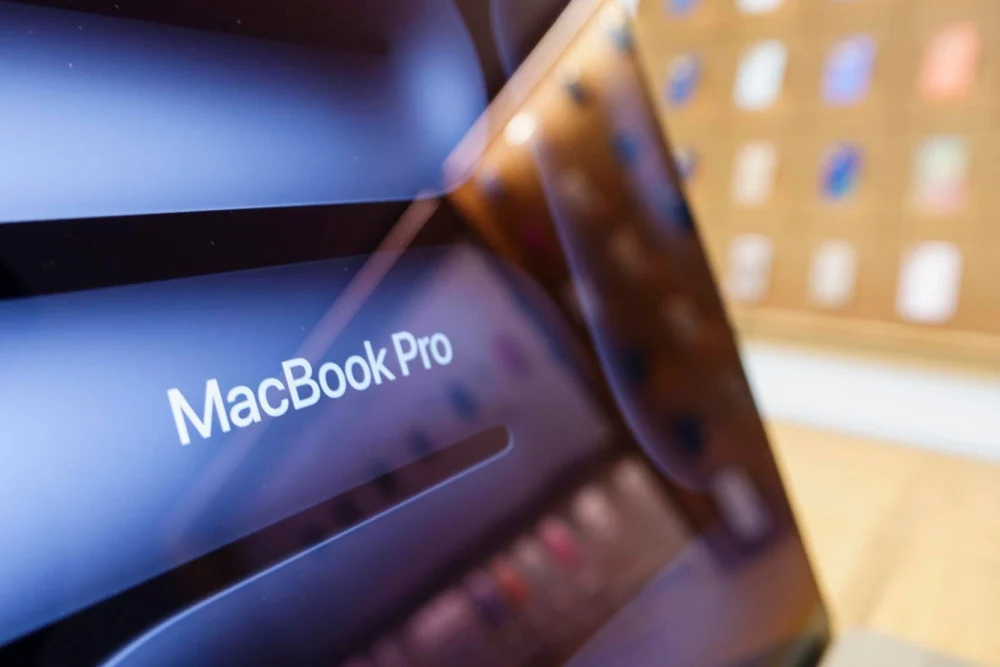
The landscape of high-performance computing is currently standing on the precipice of a significant transition as Apple prepares to round out its fifth-generation silicon architecture. While the tech world has already caught a glimpse of the M5’s foundational capabilities through its debut in the Apple Vision Pro, the latest iPad Pro, and the entry-level 14-inch MacBook Pro, the true test of the platform’s ceiling remains under wraps. Industry indicators and strategic software maneuvers now suggest that the wait for the professional-grade iterations—the MacBook Pro M5 Pro and M5 Max—is rapidly drawing to a close, with a launch window likely centered in the first quarter of 2026.
This impending release represents more than just a seasonal hardware refresh; it is a calculated effort by Apple to synthesize its hardware prowess with a burgeoning services ecosystem. By examining the technical trajectories of Apple Silicon and the company’s recent pivot toward creative software bundles, a clearer picture emerges of how the next MacBook Pro will redefine the "prosumer" and professional markets.
The Architecture of Dominance: M5 Pro and M5 Max
The transition to Apple Silicon in 2020 fundamentally altered the expectations for laptop performance-per-watt. As we move into the M5 era, the focus has shifted from mere efficiency to staggering raw power, particularly in the realm of graphics and neural processing. The base M5 chip, which arrived in late 2025, has already set a high bar. Utilizing an refined 3-nanometer process, the 10-core CPU and 10-core GPU configuration of the vanilla M5 has demonstrated single-core performance gains of approximately 13 percent over its predecessor, the M4. However, the most telling metric lies in the graphics department, where GPU performance has surged by 35 to 50 percent.
For the creative professionals who comprise the core audience for the M5 Pro and M5 Max, these base figures are merely the starting point. Historical data suggests that Apple will maintain its tiered core-count strategy. We can expect the M5 Pro to scale up to 14 CPU cores, while the flagship M5 Max will likely feature a 16-core CPU. If the scaling patterns observed in the M1 through M4 generations hold true, the M5 Pro will likely outperform the previous generation’s M4 Max in several key benchmarks.
The true "headline" performance, however, is expected from the M5 Max’s GPU. With the base M5 already delivering nearly 50 percent gains in graphical throughput, the M5 Max is projected to push multi-core GPU scores toward the 250,000 mark on popular benchmarking platforms. This level of performance bridges the gap between mobile workstations and high-end desktop towers, making the 14-inch and 16-inch MacBook Pro models formidable tools for real-time 8K video rendering, complex 3D modeling, and local LLM (Large Language Model) development.
The Software Signal: Apple Creator Studio
Hardware does not exist in a vacuum, and Apple’s most significant hint regarding the MacBook Pro launch isn’t found in a leaked spec sheet, but in a new service offering. The announcement of "Apple Creator Studio" marks a pivotal shift in the company’s business model. This subscription-based bundle, set to debut on January 28, 2026, integrates heavy-hitting professional applications like Final Cut Pro, Logic Pro, and the recently acquired Pixelmator Pro, alongside supporting tools like Motion and Compressor.
The timing of this software release is a loud signal to the market. Professional software requires professional hardware to justify a monthly or yearly subscription fee. Launching a high-end creative suite without the corresponding hardware to run it at peak efficiency would be a rare tactical error for Apple. Consequently, the January 28 release date for Creator Studio serves as a logical anchor for the M5 Pro and M5 Max hardware announcement.
This "Software as a Service" (SaaS) move also suggests that Apple is looking to deepen its "moat" within the creative industry. By bundling these tools for a competitive monthly fee (projected at £12.99 or $14.99), Apple is directly challenging the dominance of Adobe Creative Cloud. To make this subscription enticing, Apple needs to demonstrate that its vertical integration—software optimized specifically for the M5’s Neural Engine and GPU—offers a workflow speed that generic x86 systems cannot match.
Strategic Product Differentiation and Market Segmentation
The upcoming launch also clarifies Apple’s broader MacBook strategy for 2026. Currently, the lineup features a slight imbalance: the base MacBook Pro 14-inch utilizes the M5, while the more popular, consumer-focused MacBook Air remains on the M3 or M4 architecture.

Supply chain reports indicate that while the professional MacBook Pros are imminent, the M5 MacBook Air will likely be held back until later in the year, possibly for a back-to-school or late Q3 window. This creates a clear hierarchy. The MacBook Air will continue to serve as the "everyman" laptop, emphasizing portability and battery life, while the M5 Pro and Max MacBook Pros will be positioned as "power-on-demand" machines.
Furthermore, rumors persist regarding a 12-inch "budget" MacBook, potentially powered by an A18 Pro or a binned M-series chip. If this model materializes, Apple will have a three-tiered laptop strategy: a budget 12-inch model for students and light users, the MacBook Air for the general consumer and business market, and the MacBook Pro for high-intensity professional workloads. This segmentation allows Apple to maintain its premium margins while capturing a wider range of the total addressable market.
Thermal Management and the "Pro" Advantage
One of the most critical, yet often overlooked, differences between the entry-level 14-inch MacBook Pro and its more powerful siblings is thermal overhead. While the vanilla M5 chip can be found in the fanless iPad Pro, the MacBook Pro chassis allows for active cooling. This fan-assisted thermal management is what permits the "Pro" and "Max" chips to maintain peak clock speeds during sustained workloads, such as exporting a long-form documentary or compiling large codebases.
As the M5 series pushes the envelope of transistor density, heat dissipation becomes a primary engineering challenge. The M5 Pro and M5 Max are expected to utilize an advanced thermal architecture that maximizes the surface area of the heat pipes and fans. This hardware advantage ensures that the "Pro" moniker remains a functional distinction rather than just a marketing label. For professionals, the value of these machines lies not in their burst speeds, but in their ability to perform at 100% capacity for hours on end without thermal throttling.
The Wednesday Launch Tradition
Apple’s operational habits often provide as much information as their official statements. The company has a well-documented preference for mid-week announcements, particularly for products that do not require the pageantry of a live keynote at Apple Park. With the Apple Creator Studio launching on Wednesday, January 28, the industry is bracing for a "Press Release Wednesday."
This method of launching via a newsroom update and a series of coordinated videos has become Apple’s preferred way to handle iterative hardware updates. It allows the company to dominate the news cycle without the logistical overhead of a global event. For the consumer, this means the gap between the "hint" and the "availability" will be remarkably short. Pre-orders would likely open the same day, with retail availability following within a week.
Future Impact: The AI-First Workstation
Looking further ahead, the M5 Pro and M5 Max represent Apple’s definitive answer to the "AI PC" trend. While competitors in the Windows ecosystem are leaning heavily on NPU (Neural Processing Unit) branding, Apple has been integrating its Neural Engine into silicon for years. The M5 generation is expected to double down on this, with a significantly expanded Neural Engine designed to handle the next generation of on-device Apple Intelligence features.
From automated color grading in Final Cut Pro to predictive coding in Xcode, the M5 Pro and Max will be the primary vehicles for Apple’s AI ambitions. By keeping these processes on-device, Apple maintains its stance on privacy while providing the low-latency performance that cloud-based AI cannot offer.
Final Thoughts
As we approach the end of January, the pieces of the Apple puzzle are falling into place. The arrival of the M5 Pro and M5 Max is not merely a scheduled update; it is the culmination of a strategy that blends elite hardware engineering with a new, aggressive services play. For the professional user, the message is clear: the hardware is ready, the software is bundled, and the next leap in mobile computing power is just a few days away.
The M5 series marks a mature phase for Apple Silicon—one where the novelty of the transition from Intel has worn off, replaced by a consistent, formidable cadence of performance gains that keep the Mac at the center of the creative professional’s world. Whether through the lens of the record-breaking GPU scores or the strategic launch of the Creator Studio, Apple is signaling that the professional MacBook Pro remains the gold standard for those who demand the absolute ceiling of what a portable computer can achieve.
