

The home entertainment landscape is undergoing a significant democratization, driven not by raw lumen counts or exotic lens arrays, but by software integration and ease of use. Historically, the quest for a large-screen experience necessitated navigating complex setups, wrestling with external streaming sticks, or investing heavily in dedicated home theater components. However, devices like the Aurzen EAZZE D1R signal a pivotal shift. This projector, priced aggressively in the sub-$200 tier, demonstrates that for the majority of consumers seeking spontaneous, large-format viewing, the operating system baked into the hardware is now more crucial than incremental increases in native contrast ratios.
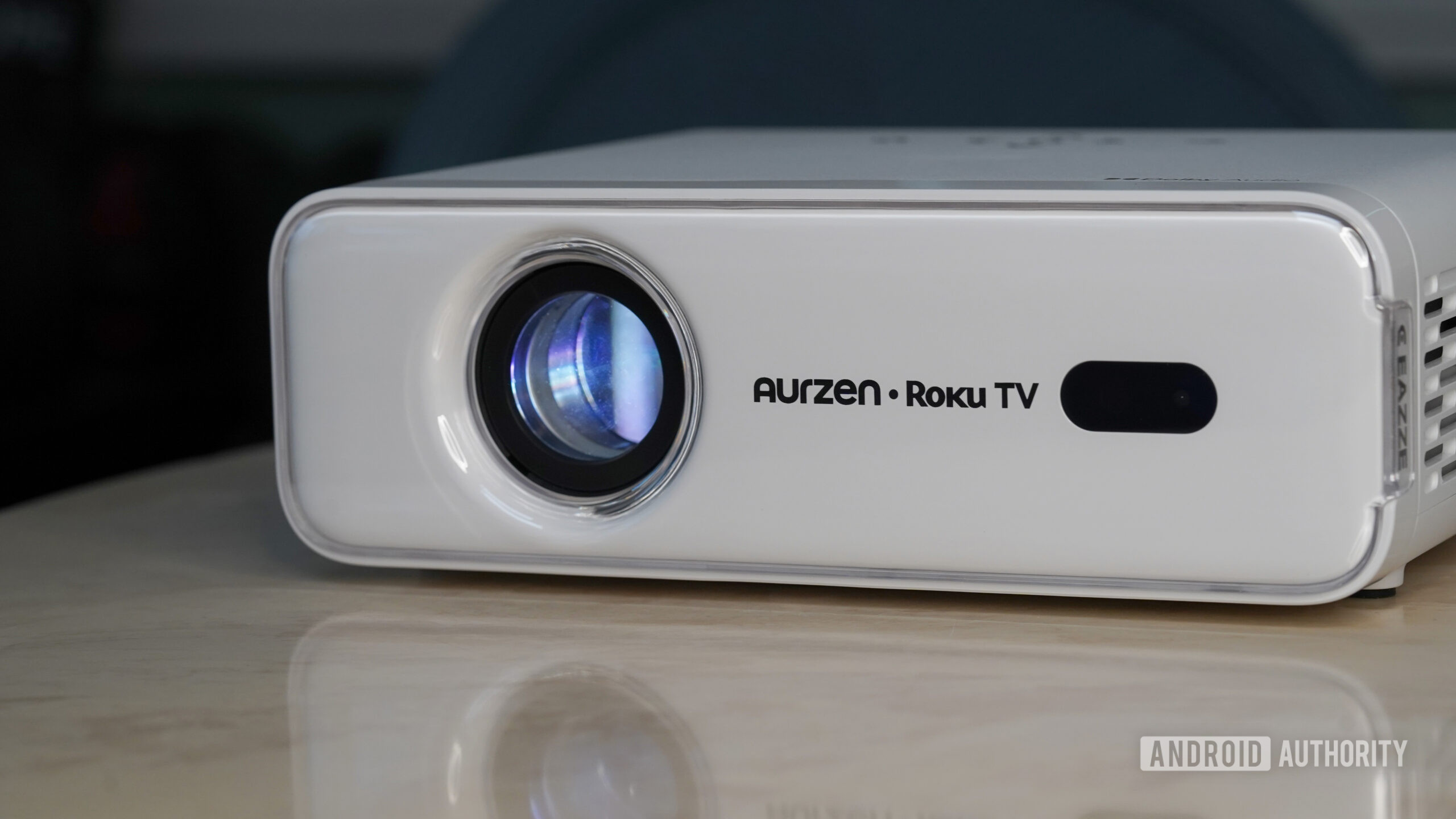
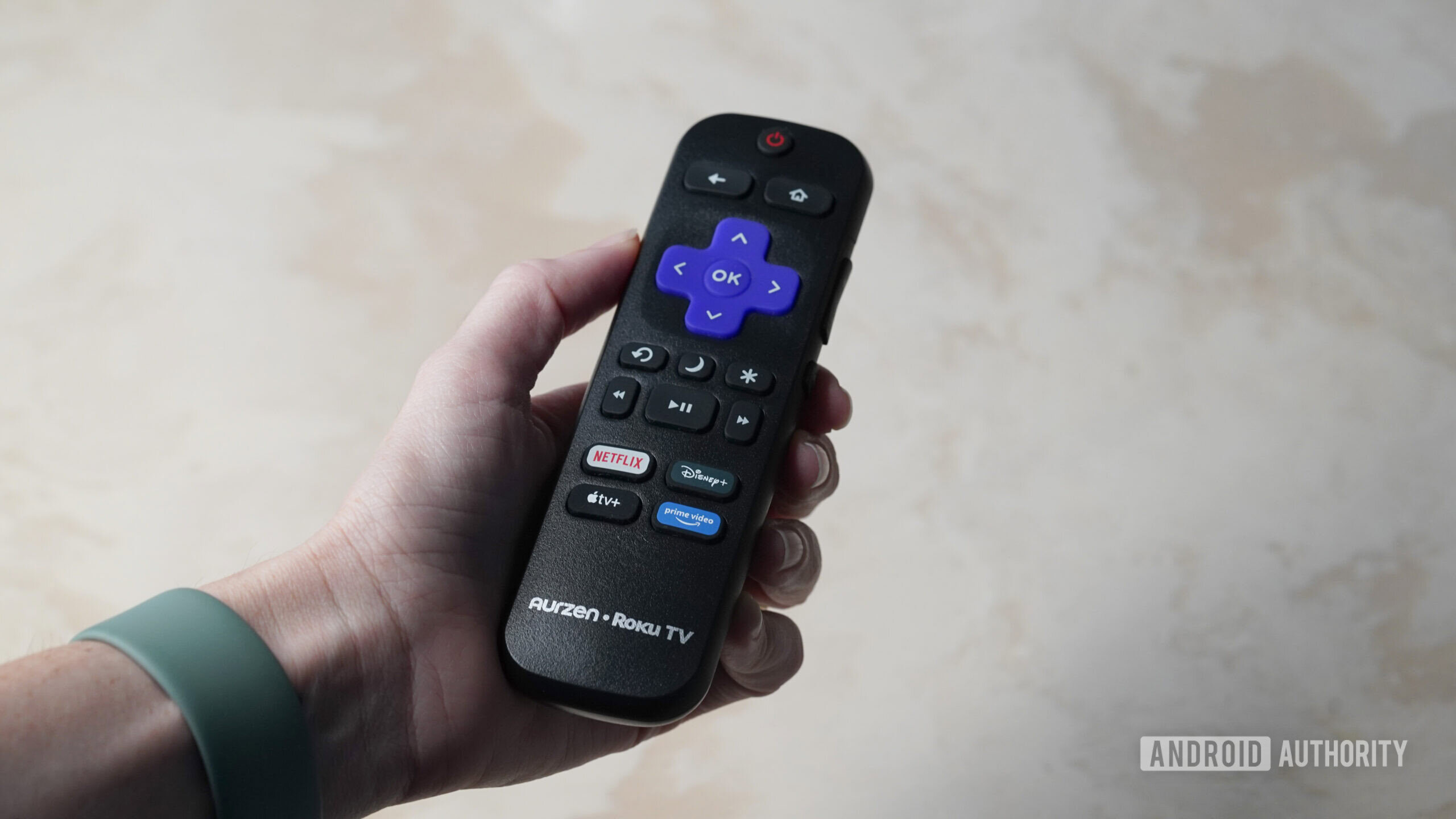
This evolution taps into a nostalgic desire for communal viewing—the kind of ritualistic event once defined by trips to the local video store and impromptu floor seating. The D1R is engineered precisely for this modern, casual application. It foregoes the pursuit of absolute cinematic perfection—a domain reserved for far more expensive DLP and LCoS solutions—in favor of delivering a reliably functional, instantly accessible viewing portal. By embedding the Roku TV platform directly into the unit, Aurzen has effectively stripped away the most common sources of friction in budget projection: software incompatibility and peripheral dependency.
Contextualizing the Budget Projector Market Disruption
The sub-$300 projector segment has long been a Wild West of dubious specifications and frustrating user experiences. Many offerings rely on heavily customized, often sluggish, versions of Android, forcing users to sideload apps or deal with interfaces riddled with advertisements and poor navigation. Consumers purchasing these units often face a steep learning curve just to access their preferred streaming services. This friction defeats the purpose of a "plug-and-play" entertainment device.
The D1R’s strategic adoption of native Roku TV changes this dynamic fundamentally. Roku remains arguably the most user-friendly and stable streaming interface available. For a device targeting renters, families, or those new to projection technology, this familiarity is a massive competitive advantage. Instead of adding an HDMI dongle (like a Roku Stick or Fire TV device) to an existing projector—which consumes an extra port, adds cost, and introduces another remote control to manage—the D1R provides a unified experience right out of the box. This integration streamlines the entire pathway from power-on to content consumption.
Technical Specifications and the Practical Trade-Offs
The technical profile of the EAZZE D1R is transparently budget-oriented, adhering to expected compromises at this price point. It utilizes a 1080p Full HD DLP projection core. While 4K projectors are becoming more common at higher price points, 1080p remains the functional standard for accessible, large-scale viewing. Aurzen quotes brightness at approximately 280 ANSI lumens. This figure is critical; it immediately signals that the D1R is not designed for daytime viewing or rooms with significant ambient light leakage.

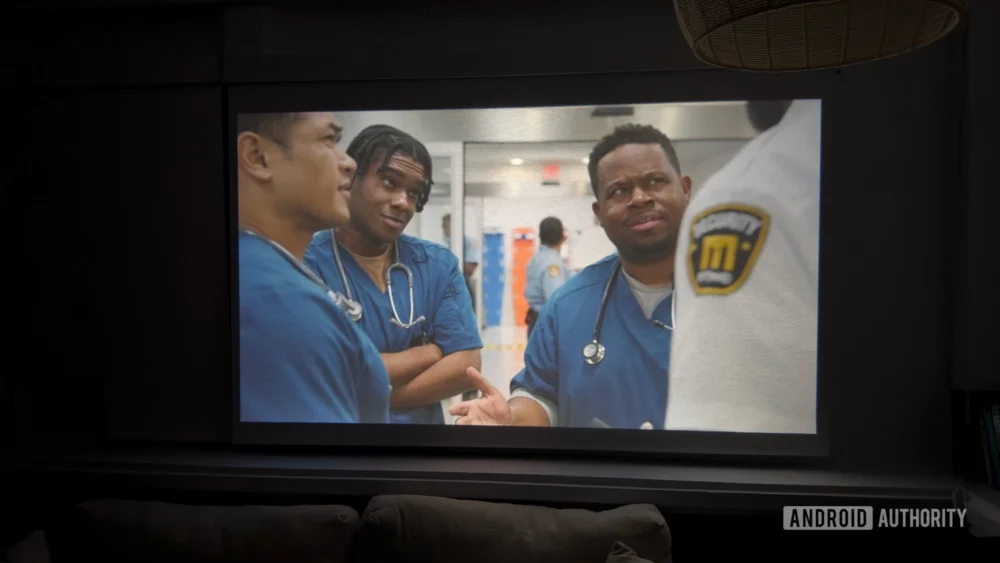
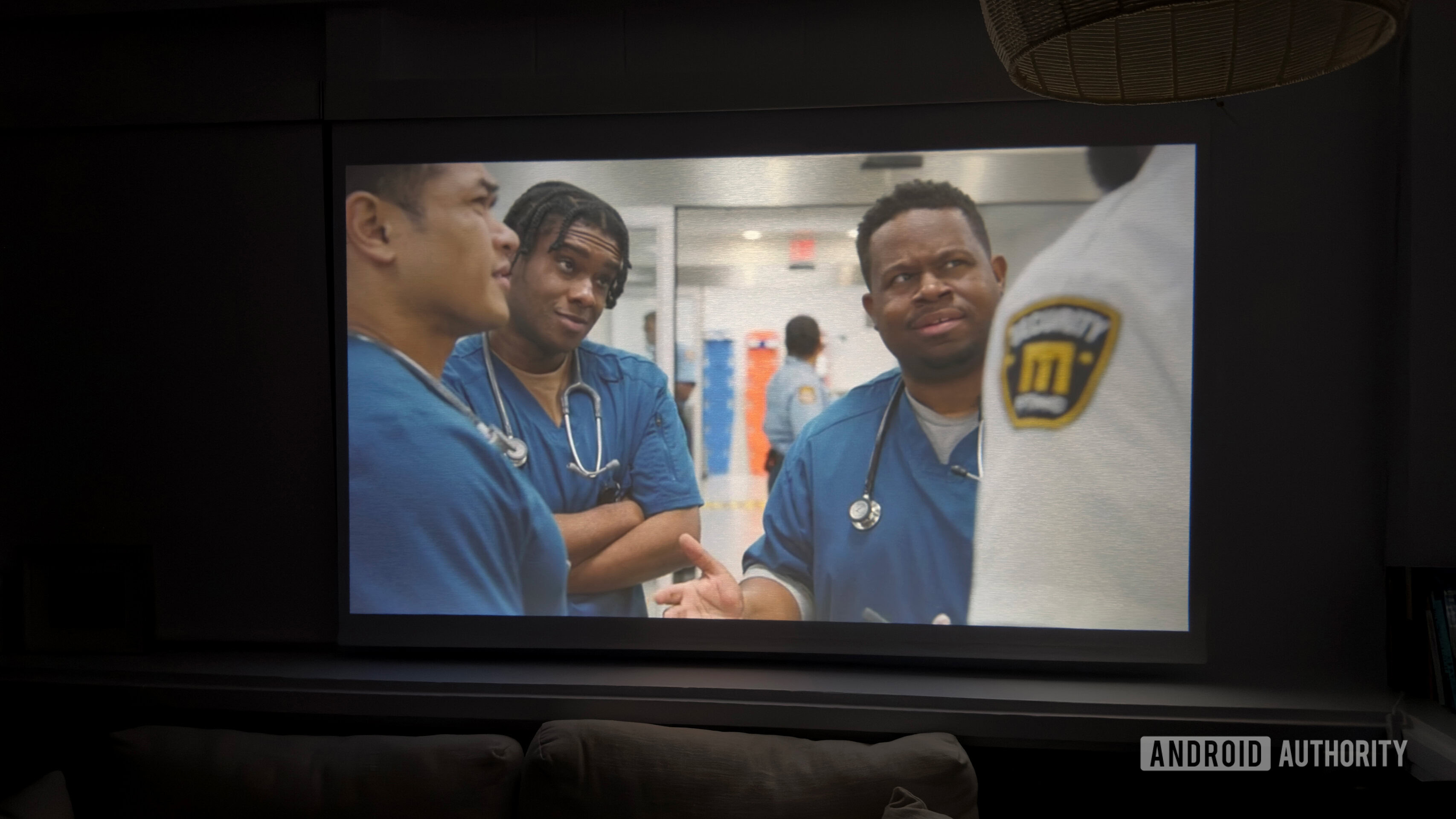
The effective viewing envelope is thus strictly defined: a darkened room, ideally aided by blackout curtains or nighttime viewing. Within these controlled parameters, the device can project an image scaling up to an impressive 200 inches. When assessing image quality, the reviewer noted the expected shortcomings when compared to premium hardware—namely, blacks lack true inky depth, and shadow detail in low-light scenes can be compressed. However, the key journalistic takeaway is that the image quality is "clean and very watchable" under appropriate conditions. This distinction between aspirational cinematic performance and practical viewing satisfaction is central to understanding the D1R’s value proposition. It delivers on the size and accessibility of a large screen, if not the absolute fidelity.
Operational Simplicity: Automation Over Calibration
In high-end projection, manual calibration—tweaking focus, lens shift, color temperature, and focus rings—is expected. For a device intended to be deployed quickly for an impromptu backyard screening or a bedroom movie night, such complexity is prohibitive. The D1R addresses this through robust automation features.
Autofocus mechanisms have improved significantly across the industry, and the D1R’s implementation is described as effective. Similarly, auto keystone correction handles basic angular adjustments with relative ease. The constraint here is the trade-off for simplicity: the manual controls are sparse. Users accustomed to granular image adjustments will find the settings menu shallow. This is not a flaw in execution, but a deliberate design choice prioritizing Time-to-Picture (TTP) over picture customization. This focus on TTP makes the D1R an excellent tool for spontaneity, a feature often overlooked in technical reviews but vital for consumer adoption in the casual segment.
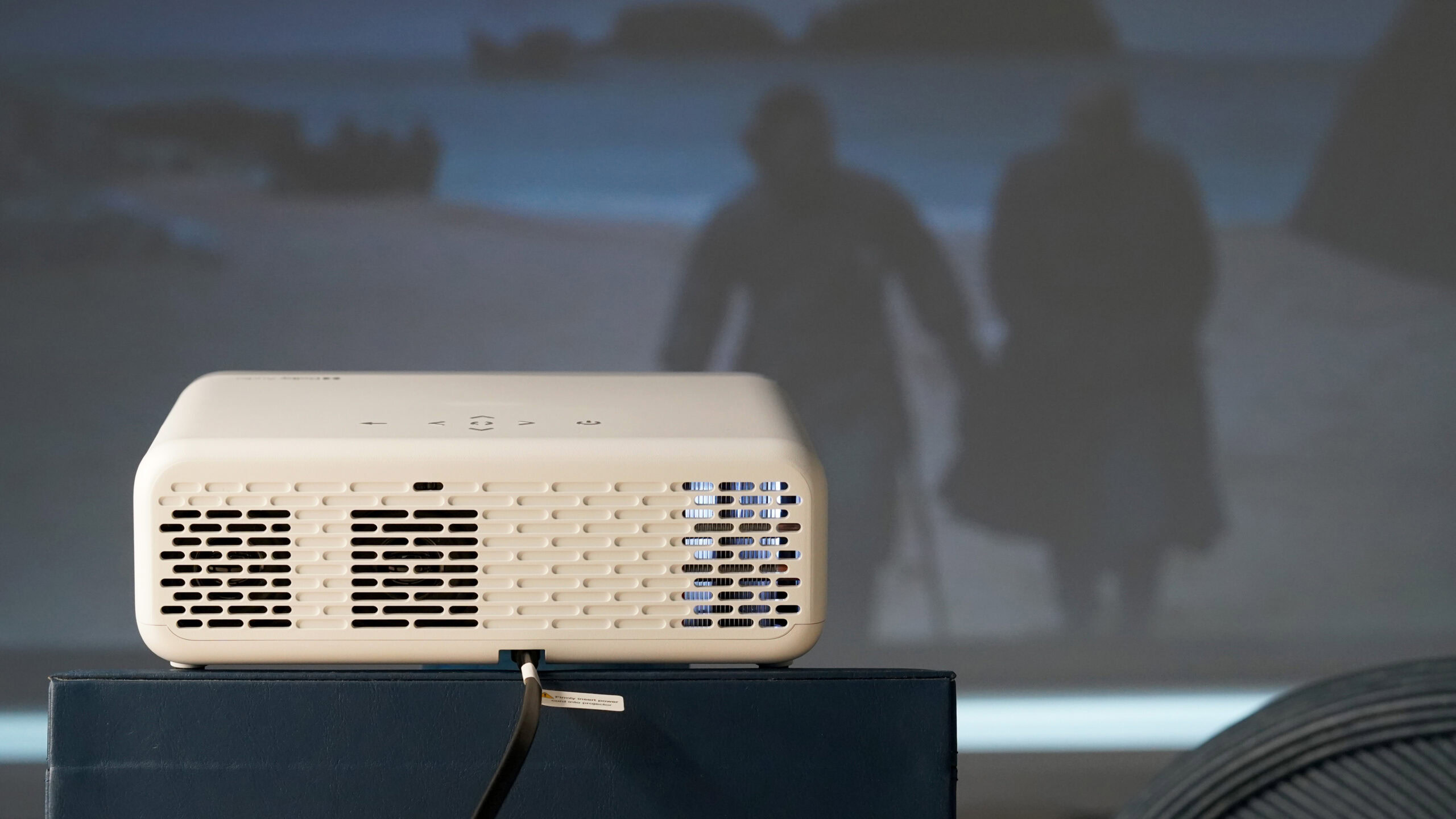
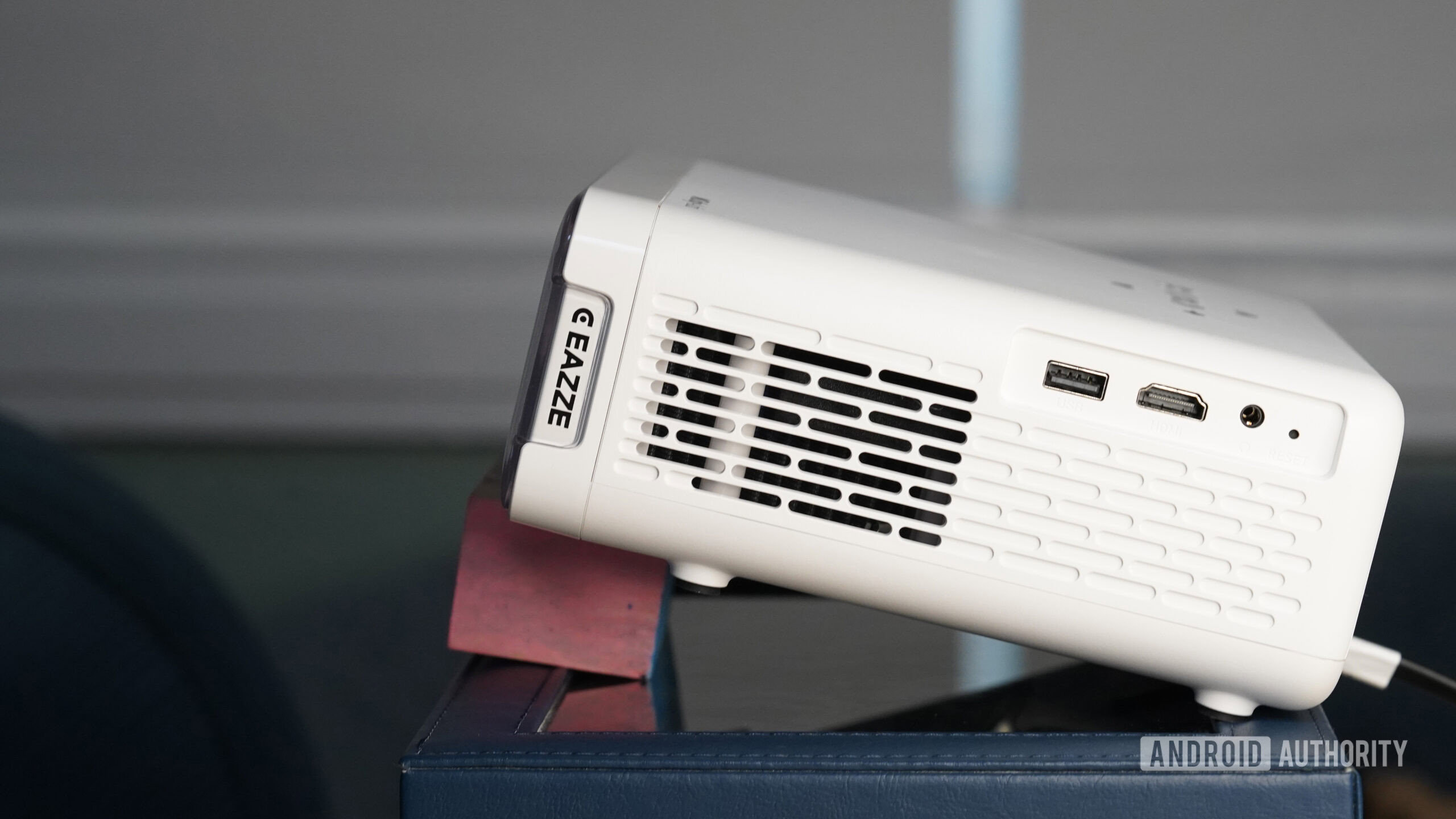
However, this simplicity introduces a physical limitation. The chassis design is utilitarian, lacking the sophisticated motorized lens shifts or versatile pivoting stands common on "lifestyle" projectors that cost several times more. The necessity of propping the unit up manually (as demonstrated by the use of scrap wood) highlights that while digital correction handles geometry, physical flexibility remains limited by the housing. This suggests Aurzen expects users to either dedicate a low surface for projection or purchase specific aftermarket stands for elevated placement.
Audio Performance and Connectivity Ecosystem
Projector audio solutions invariably suffer from inadequate speaker size and placement. The D1R includes Dolby Audio processing and integrated speakers intended for immediate functionality. For casual indoor viewing in a standard living room, these speakers suffice for dialogue clarity. The technical weakness, however, is the predictable lack of low-end frequency response (bass) and overall acoustic scale.
This leads to a common industry realization: for any impactful viewing experience—especially outdoors or in larger rooms—external audio is mandatory. The inclusion of Bluetooth for wireless speaker pairing is a necessary feature that mitigates the internal speaker limitations. Furthermore, the inclusion of standard connectivity options (Wi-Fi, Bluetooth, HDMI, USB) and AirPlay support ensures broad compatibility with modern content sources, from Blu-ray players to laptops and personal mobile devices. The one notable area where the budget nature asserts itself is gaming; noticeable input lag makes the D1R unsuitable for timing-sensitive, fast-action gaming, placing it firmly in the realm of passive media consumption.
Industry Implications: The OS as the Differentiator
The strategic alliance between a hardware manufacturer like Aurzen and a mature platform like Roku has significant implications for the broader display and projection industry. We are witnessing a transition where the Smart TV operating system is becoming the primary value driver, often eclipsing the display panel or projection engine itself in terms of user satisfaction.
For years, manufacturers of budget projectors wrestled with developing proprietary OS layers that were costly to maintain and slow to update. By licensing Roku TV, Aurzen instantly inherits a stable, widely supported, and familiar ecosystem. This dramatically lowers development overhead and immediately elevates the perceived quality of the user experience. This trend is forcing competitors relying on unoptimized Android forks to reassess their strategy. Future success in the accessible projection market will likely depend on securing partnerships with leading smart TV operating systems (Roku, Google TV, or potentially even simplified versions of Fire OS) rather than attempting to innovate the interface from scratch.
The D1R’s success could encourage other component manufacturers to integrate these established platforms directly, further pushing down the barrier to entry for consumers who prioritize content access over ultimate image fidelity. It standardizes the user experience, transforming a technical gadget into an appliance.
The Future of Accessible Viewing: Portability and Permanence
The D1R sits in an interesting tension point: it is portable enough for occasional use, yet its auto-setup features make it appealing for semi-permanent installation in a secondary space, like a den or a child’s room. This versatility is key to its market appeal.
Looking forward, this model sets a precedent for "appliance-grade" projection. Future iterations in this price category will likely focus on:
- Increased Lumens with Controlled Costs: The next major leap will be pushing ANSI lumens above the 400 mark without drastically increasing the $200 price ceiling, perhaps through more efficient LED light sources or advanced light recycling techniques.
- Enhanced Physical Flexibility: To truly eliminate the need for manual propping, integrated, high-quality motorized tilt and lens shift mechanisms—even rudimentary ones—will become expected features, likely packaged with optional, slightly more premium stands.
- Superior Built-in Audio: While external speakers are the current solution, incorporating soundbars or directional speaker arrays directly into the projector chassis (similar to some high-end sound bases) could eliminate the need for Bluetooth pairing entirely for casual viewing.
The Aurzen EAZZE D1R is not merely a projector; it represents a mature understanding of the casual consumer market. It acknowledges that for many, the magic of the big screen is inseparable from the ease of accessing Netflix, Hulu, or Disney+.
Final Assessment: Value Through Friction Reduction
The review concludes that the EAZZE D1R is optimally positioned for consumers who value simplicity and cost-efficiency above all else. It is an excellent entry point for those tentatively exploring projection technology—renters restricted by leases, parents wanting an occasional event projector, or anyone disillusioned by the complexity of cheaper, less polished alternatives.
It successfully avoids the trap of being "half-baked," largely due to the stability afforded by the Roku TV integration. While cinematic purists will find its optical performance insufficient for critical viewing, the device excels at what it promises: a reliable, large-format digital canvas that is ready to stream content almost immediately upon being powered on. This focus on removing technical friction—cables, setup time, and interface confusion—is the true innovation here, solidifying the D1R’s status as a solid value proposition in the highly competitive budget display sector. It transforms the occasional movie night from a planned event into an easily achievable spontaneous activity.
