

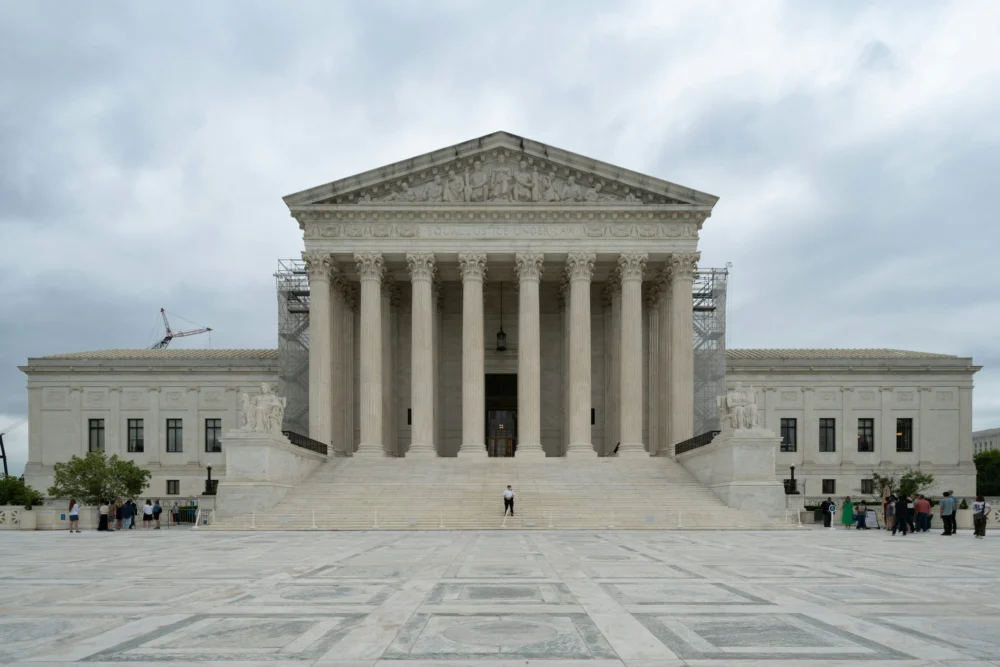
The recent revelation concerning the cyber-intrusion activities of Nicholas Moore, a 24-year-old resident of Springfield, Tennessee, has pulled back the curtain on the vulnerabilities inherent in critical federal information systems and the audacious methods some modern threat actors employ for validation. Moore, who last week confirmed his intent to plead guilty to charges related to the repeated hacking of the U.S. Supreme Court’s electronic document filing infrastructure, is now confirmed, through recently filed court documents, to have leveraged his access not for financial gain on the dark web, but for ego-driven exposure on the highly visible social media platform, Instagram, under the handle @ihackthegovernment.
Initially, the public understanding of Moore’s transgression focused narrowly on the breach of the nation’s highest judicial body. However, a detailed filing submitted to the court on Friday—meticulously tracked by cyber-focused observers like Court Watch’s Seamus Hughes—expanded the scope of the criminal operation significantly. This documentation establishes that Moore’s activities extended beyond the Supreme Court, compromising the networks of at least two other major federal entities: AmeriCorps, the agency responsible for managing national volunteer and stipend programs, and the Department of Veterans Affairs (VA), which administers crucial healthcare and welfare services to millions of military veterans.
The methodology employed by Moore underscores a pervasive vulnerability in federal digital defenses: the failure to rigorously protect privileged access credentials. The court filing explicitly states that Moore gained illicit entry to these diverse federal systems by utilizing stolen credentials belonging to authorized users. This indicates a likely entry vector involving sophisticated phishing campaigns, successful brute-force attacks against weak passwords, or the acquisition of previously compromised credentials from third-party data dumps—a practice known as credential stuffing. Once inside, Moore successfully executed lateral movement within these distinct federal environments, accessing and exfiltrating highly sensitive personal data.
The subsequent posting of this stolen data on Instagram, far from the clandestine nature of typical cybercrime, represents a significant shift toward ‘proof-of-exploit’ exhibitionism. This tactic prioritizes public notoriety and validation over traditional monetary profit, transforming sensitive federal data into bragging rights.
The specific data exfiltrated highlights the deep penetration achieved across multiple agencies. In the case of the Supreme Court victim, identified only by the initials GS, Moore posted their full name alongside "current and past electronic filing records." While the precise sensitivity of these records is yet to be fully detailed, any compromise of judicial filing systems raises profound concerns regarding the integrity of legal proceedings and the confidentiality of litigants.
The breach of AmeriCorps servers yielded far more extensive personally identifiable information (PII). For the victim identified as SM, Moore not only boasted about server access but published a comprehensive dossier: name, date of birth, email address, home address, phone number, citizenship status, veteran status, service history, and critically, the last four digits of their social security number. This aggregation of data is highly valuable for advanced identity theft, capable of causing long-term financial and personal harm to the victim.
Perhaps the most alarming compromise detailed in the filing involved the Department of Veterans Affairs. In this instance, the victim, HW, had their identifiable health information (PHI) exposed. Moore reportedly sent an associate a screenshot taken directly from HW’s MyHealtheVet account, clearly identifying the veteran and detailing the specific medications they had been prescribed. This incident is a stark reminder of the vulnerability of federal healthcare data, breaching not only privacy but potentially violating the trust underpinning the patient-provider relationship, falling squarely into the category of a major HIPAA (Health Insurance Portability and Accountability Act) concern, even if the primary prosecution rests on the Computer Fraud and Abuse Act (CFAA).
Industry Implications and the Zero-Trust Imperative
Moore’s multi-agency breach serves as a critical case study in the systemic risks facing the U.S. government’s distributed IT architecture. Federal agencies often operate with legacy systems and varied security protocols, creating an uneven defense perimeter. The fact that a single actor could successfully leverage stolen credentials to penetrate high-profile judicial systems, human resources databases (AmeriCorps), and sensitive healthcare portals (VA) suggests a fundamental lapse in adopting modern, proactive security measures.
Expert analysis consistently points to the necessity of implementing rigorous Zero Trust Architecture (ZTA) across all federal endpoints. ZTA mandates that no user, device, or application, whether inside or outside the network perimeter, is trusted by default. In Moore’s case, had robust multi-factor authentication (MFA) been uniformly enforced—especially for privileged or sensitive access points like the Supreme Court e-filing system—and micro-segmentation deployed to prevent lateral movement, the initial compromise via stolen credentials might have been contained to a single account, preventing the cascading breaches across AmeriCorps and the VA.
Furthermore, the specific targeting of PII and PHI highlights a compliance failure under the Federal Information Security Management Act (FISMA). Agencies entrusted with handling sensitive personal data, especially health records, are subject to stringent protective requirements. The exposure of prescribed medications from a VA account is particularly egregious, as this information can be used for blackmail, targeted scams, or discrimination.
The Psychology of Cyber Exhibitionism
The decision by Moore to publicize his exploits on a mainstream platform like Instagram, rather than monetizing the data or operating in the shadows of the dark web, speaks volumes about the evolving motivations of some contemporary cybercriminals. This behavior is often linked to a desire for status, recognition, and validation within specific online communities.
Dr. Anya Sharma, a cybersecurity psychologist specializing in digital deviance, notes that this phenomenon, often termed "cyber ego" or "proof-of-exploit culture," is driven by instant gratification. "The hacker isn’t seeking long-term profit; they are seeking immediate notoriety," Sharma explains. "Instagram provides a visible, albeit temporary, monument to their skill. It’s a performance, a boast intended to impress peers and intimidate authorities. This shift creates a difficult challenge for law enforcement, who must monitor public-facing social platforms for criminal self-incrimination, which often occurs before the victims are even aware of the breach."
The use of a handle like @ihackthegovernment demonstrates a clear intent to taunt and challenge federal authority, suggesting a motivation rooted in anti-establishment sentiment or simply thrill-seeking, rather than organized state-sponsored or large-scale organized crime operations. While these ‘lone wolf’ actors may lack the technical sophistication of state-level adversaries, their low operational security (OpSec)—such as using personal social media accounts—often facilitates their eventual capture.
The Legal Framework and Future Sentencing Trends
The charges brought against Moore are serious, encompassing multiple counts of unauthorized access to protected computer systems. However, the potential maximum sentence outlined in the court document—one year in prison and a maximum fine of $100,000—raises significant questions about whether existing federal statutes adequately address the gravity of these breaches, particularly when highly sensitive PII and PHI are compromised.
Legal experts argue that the disparity between the severe harm inflicted upon victims—who face years of identity monitoring and potential health complications—and the relatively light maximum sentence reflects the challenges in applying decades-old computer crime laws, like the CFAA, to modern data breaches.
"When you compare the exposure of health records for a veteran to the typical penalty for stealing a physical item of comparable value, the legal penalty often seems insufficient," states Eleanor Vance, a technology law professor. "The true cost of these breaches is measured in eroded public trust and immense victim remediation costs, neither of which are fully captured by a short prison term."
The trend in federal prosecution is moving toward stiffer penalties for crimes involving the theft of medical or veteran data, often by layering charges related to identity theft and misuse of official records. However, if Moore’s final plea agreement sticks close to the current outlined maximums, it could set a concerning precedent, suggesting that the public display and compromise of data from the nation’s highest court and sensitive health services carry a surprisingly limited punitive risk.
Future Impact and Remediation
The Moore case serves as an urgent catalyst for reassessing federal cybersecurity posture. Moving forward, federal agencies must prioritize eliminating the reliance on static credentials for sensitive access. Mandatory hardware-backed MFA, biometric verification, and continuous session monitoring are no longer optional best practices but essential defense mechanisms.
The fallout from this incident will likely prompt internal audits across the affected agencies. For the Supreme Court, the focus must be on securing electronic filing systems that bridge public access with internal judicial operations. For the VA, the exposure demands an immediate review of MyHealtheVet portal security and compliance with PHI disclosure protocols.
In the broader context of cybercrime, the Moore case confirms a troubling trend: the fusion of traditional hacking with self-aggrandizing social media behavior. As threat actors continue to use public platforms to validate their exploits, law enforcement agencies must deepen their collaboration with platform providers to detect and neutralize these digital boasts before maximum harm is inflicted. The challenge is not only to secure the networks themselves but to effectively police the new, highly visible frontier of cybercrime exhibitionism. If the penalties do not align with the severe consequences of exposed federal data, such high-risk, low-reward behavior will only continue to proliferate among young, ego-driven hackers.
