

The process of pharmaceutical discovery—the painstaking journey of identifying a viable therapeutic molecule and shepherding it through preclinical validation—is globally recognized as one of the most capital-intensive, time-consuming, and failure-prone endeavors in modern science. For decades, the dominant methodological approach, epitomized by high-throughput screening (HTS), has relied on a brute-force, expensive, and fundamentally scattershot methodology. HTS involves testing hundreds of thousands, or even millions, of compounds against a biological target, hoping to find a handful of "hits" that might eventually lead to a drug candidate. This approach contributes significantly to the fact that the cost of bringing a single novel medicine to market often exceeds $2.5 billion, taking over a decade.
This inefficiency has created an enormous gravitational pull for disruptive technologies, and into this vacuum has rushed a new generation of biotech enterprises wielding artificial intelligence and sophisticated data science. Among these firms, Chai Discovery has rapidly established itself as a frontrunner, not only due to its technological claims but also because of the sheer velocity of its ascent and the caliber of its institutional backing.
Founded in 2024, Chai Discovery has achieved remarkable financial milestones in just over a year of operation. The startup has successfully courted some of the most influential venture capital heavyweights in Silicon Valley, culminating in a massive Series B funding round in December, which injected an additional $130 million into the company coffers. This round propelled Chai to a valuation of $1.3 billion, instantly granting it "unicorn" status and marking it as one of the most visible and well-capitalized players in the nascent field of AI-driven biologics design.
The ultimate validation of Chai’s technological promise, however, arrived recently with the announcement of a landmark collaboration with pharmaceutical titan Eli Lilly and Company. Under the terms of the agreement, Lilly will integrate Chai’s proprietary software platform to significantly accelerate its internal drug development pipeline, particularly focusing on the development of novel biologics.
Chai’s core technological engine is an advanced algorithm suite dubbed Chai-2. This system is purpose-built for the generative design of complex proteins, specifically therapeutic antibodies. Antibodies are large, intricate proteins that form the foundation of modern biological medicines, essential for fighting complex illnesses ranging from autoimmune disorders to cancer. Chai posits its platform as a "computer-aided design suite" for molecules, moving the industry beyond traditional simulation and prediction tools toward genuine generative capabilities—meaning the AI can invent novel, functional protein sequences from scratch, optimized for specific clinical criteria.
The Broader Industry Convergence and the Race for Compute
The collaboration between Chai and Eli Lilly is indicative of a profound, accelerating trend: the full-scale integration of hyper-scale computing resources and generative AI into the biopharma value chain. This deal did not occur in isolation. It was announced closely followed by a separate, even larger strategic move by Eli Lilly, which committed to a $1 billion partnership with Nvidia to establish a dedicated AI drug discovery lab, often referred to as a “co-innovation lab,” in the critical hub of San Francisco.
This sequence of events underscores that major pharmaceutical companies are no longer treating AI as an experimental tool but as mission-critical infrastructure. The goal of these massive investments—combining proprietary biological datasets, elite scientific expertise, and the immense computational power offered by platforms like Nvidia’s GPU clusters—is to dramatically compress the timelines associated with identifying, optimizing, and validating new therapeutic candidates. The industry consensus is shifting: competitive advantage in the next decade will be determined by speed and computational efficiency, not just lab space.
While the enthusiasm is palpable, particularly among venture capitalists and the technical founders driving these startups, the field of AI drug discovery is not without its detractors. Long-time veterans of the pharmaceutical industry, having witnessed previous technological hypes fail to materialize into approved medicines, express caution. They point to the inherent, biological difficulty of drug development, suggesting that even the most powerful algorithms may not be able to overcome the complex, unpredictable hurdles of clinical trials and the human body’s multifaceted responses. The transition from an accurate in silico prediction to a safe and effective in vivo treatment remains the industry’s most notorious challenge.
However, for every voice of skepticism, there is robust confidence from investors who have witnessed the transformative power of generative AI in other domains. Elena Viboch, a Managing Director at General Catalyst and a major backer of Chai Discovery, articulated this bullish outlook. Her firm is banking on the first-mover advantage. "We believe the biopharma companies that move the most quickly to partner with companies like Chai will be the first to get molecules into the clinic, and will make medicines that matter," Viboch stated. She provided a remarkably aggressive timeline, suggesting that partnerships forged now could lead to "first-in-class medicines enter[ing] into clinical trials" by the end of 2027.
Lilly’s own internal AI leadership echoes this optimism. Aliza Apple, who heads TuneLab, Lilly’s program focused on applying machine learning to advance drug discovery, highlighted the synergy created by the partnership. She noted that by integrating Chai’s generative design models with Lilly’s extensive, proprietary biologics expertise and deep data reservoirs, they aim to fundamentally redefine the molecular design process. The explicit goal is to "design better molecules from the outset," thereby accelerating the overall development cycle for innovative patient therapies.
The Genesis of a Unicorn: From OpenAI’s Research to Molecular Design
The seeds of Chai Discovery’s success were planted long before the company’s official founding in 2024. The story of its inception is deeply interwoven with the very fabric of modern generative AI development, tracing back approximately six years to conversations involving the co-founders and OpenAI CEO Sam Altman.
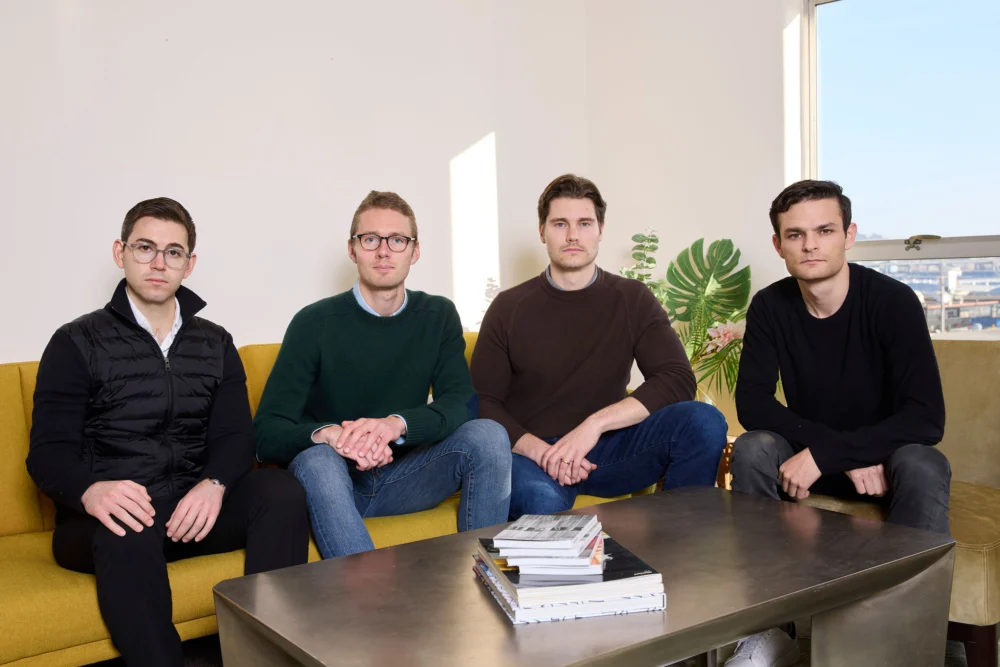
One of Chai’s co-founders, Josh Meier, initially worked at OpenAI on the research and engineering team back in 2018. Following his departure, Altman recognized Meier’s exceptional talent and reached out to Jack Dent, Meier’s former computer science classmate at Harvard and, at the time, an engineer at Stripe (another firm where Altman was an early investor). Altman sought to explore the potential for a new startup focused on proteomics—the large-scale study of proteins.
As Dent recalled, Altman reached out, noting the high regard everyone at OpenAI held for Meier and inquired about the viability of a proteomics spinout. Dent was enthusiastic, but Meier, despite the endorsement, was pragmatic. He felt the underlying AI technology required for truly powerful, generative molecular design was not yet sufficiently mature. The computational models and algorithms necessary to handle the vast complexity and subtle structural nuances of proteins were still in a nascent state.
Meier subsequently pursued a critical path of research that would prove instrumental to Chai’s eventual technological foundation. At Facebook’s research and engineering division, he was instrumental in developing ESM1 (Evolutionary Scale Modeling), a foundational transformer protein-language model. This work was a significant precursor to the current generation of generative models now being applied to drug discovery. Following his tenure at Facebook, Meier spent three years at Absci, another AI-driven biotech firm focused on therapeutic creation, gaining crucial, applied industry experience.
By 2024, the technological landscape had sufficiently shifted. Large language models (LLMs) had demonstrated their capability to handle complex sequence data and generate novel, coherent structures across diverse domains, providing the necessary algorithmic maturity. Meier and Dent, alongside co-founders Matthew McPartlon and Jacques Boitreaud, finally felt the moment was ripe to actualize their proteomics vision. Dent recounted reaching back out to Altman: “Josh and I reached back out to Sam and told him we should pick up that conversation where we left off—and that we were starting Chai together.”
The enduring relationship proved strategic. OpenAI became one of Chai’s foundational seed investors, and the startup’s earliest operations were conducted directly from OpenAI’s physical offices in San Francisco’s Mission neighborhood—a rare gesture highlighting the depth of the organizational and personal ties between the AI giant and the nascent biotech firm.
Differentiating Custom Generative Architectures
Now, basking in the light of unicorn status and a significant partnership with a top-tier pharmaceutical entity, Chai’s leadership is keen to emphasize the technical differentiation that separates them from the plethora of other startups attempting to apply generalized AI to biology. Dent stresses that the company’s rapid growth is directly attributable to its highly focused, specialized team and the proprietary nature of its technology.
"Every line of code in our codebase is homegrown," Dent asserted. "We’re not taking LLMs off the shelf that are in the open-source [ecosystem] and fine-tuning them. These are highly custom architectures."
This commitment to bespoke, proprietary model development is critical in the domain of biologics. While generalized LLMs excel at processing human language, proteins represent a biological language with exponentially higher dimensionality, requiring specific inductive biases and training protocols to manage complex folding patterns, binding affinities, and structural constraints. Chai’s investment in custom generative models, tailored explicitly for antibody design, suggests an architectural advantage designed to yield candidates with higher success probability in subsequent preclinical testing.
Future Implications and the ‘Undruggable’ Frontier
The successful deployment of platforms like Chai-2 promises far-reaching industry implications that extend beyond merely speeding up existing processes. General Catalyst’s Viboch noted that the barriers to the deployment of these computational models in discovery are fundamentally low, meaning the competitive race is truly about implementation speed and efficacy.
Crucially, the adoption of generative AI is expected to achieve two primary transformative effects. First, the compression of discovery timelines—reducing the initial identification and optimization phase from years to potentially months. Second, and perhaps more significantly, the ability to unlock previously "undruggable" classes of medicines.
Many diseases are characterized by complex or highly dynamic protein targets that are structurally difficult for traditional small-molecule drugs or even conventional antibodies to engage effectively. By generating novel, synthetic antibodies optimized for specific geometries and functional requirements that human intuition or HTS could never foresee, AI platforms offer the potential to design therapeutics for targets previously considered inaccessible.
The strategic partnership between a nimble, hyper-specialized AI firm like Chai and a global pharmaceutical powerhouse like Eli Lilly illustrates the emerging blueprint for innovation in modern medicine. The future of drug development is unlikely to be dominated by monolithic Big Pharma R&D centers operating in isolation; instead, it will be defined by deep, synergistic collaborations where Silicon Valley’s expertise in data, generative models, and computing power meets the centuries of proprietary biological data and clinical expertise held by established industry leaders. If the aggressive timelines projected by investors hold true, the era of AI-designed, first-in-class therapeutics is imminent, promising a fundamental overhaul of how life-saving medicines are brought to patients.
