

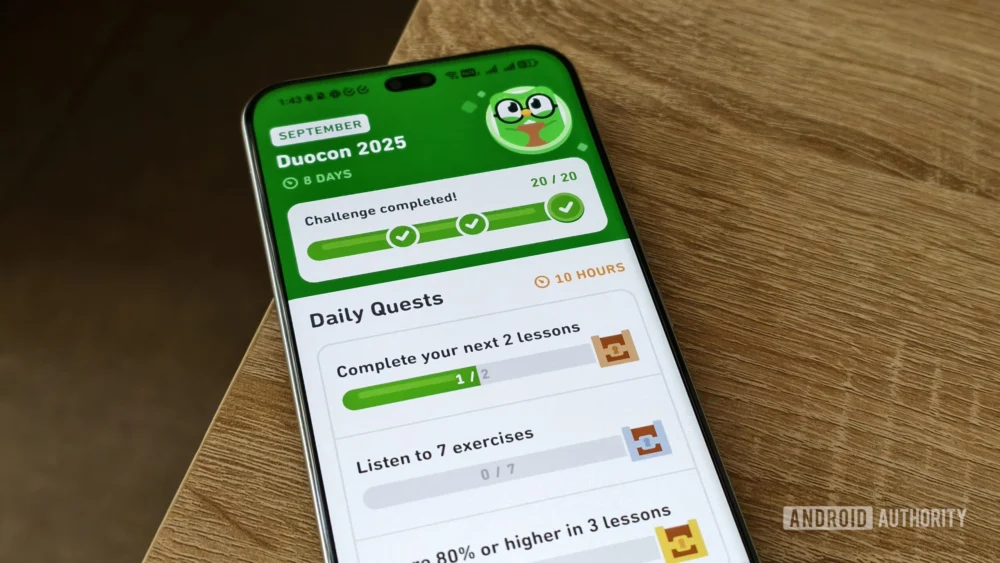
The digital landscape of language acquisition was momentarily fractured today as Duolingo, the titan of accessible, gamified education, experienced a substantial service disruption, leaving millions of dedicated learners unable to access their lessons and, perhaps more critically, jeopardizing their carefully cultivated daily streaks. Initial reports flooded social media channels and independent outage tracking platforms, confirming that the issue was not localized to individual user devices or network connectivity but stemmed from a widespread operational failure within Duolingo’s own infrastructure. The platform, which boasts a staggering user base spanning nearly every country and offering instruction in dozens of languages, quickly acknowledged the incident, directing users to its official status portal where the problem was categorized as a "major outage."
This incident serves as a potent reminder of the inherent fragility of cloud-dependent services, even those that have achieved near-ubiquitous penetration in their respective market niches. Duolingo’s success has been built upon a foundation of relentless accessibility and engagement mechanics—the streaks, the leaderboards, the gentle, persistent notifications—all of which rely on seamless, real-time server communication. When that communication breaks down, the immediate consequence is user frustration, but the deeper implication touches upon the operational resilience expected of a modern, multi-billion-dollar technology company.
Contextualizing the Duolingo Phenomenon
To fully appreciate the scope of this disruption, one must first understand Duolingo’s position in the EdTech sector. Founded in 2011, Duolingo fundamentally democratized language learning by offering a robust, free tier supported by advertising and a premium subscription model (Super Duolingo). It successfully navigated the transition from a novelty application to an indispensable daily utility for many, integrating principles from behavioral economics and game design to maintain user retention. For many users, especially those in regions where traditional, formal language instruction is prohibitively expensive or inaccessible, Duolingo is their primary, if not sole, pathway to linguistic proficiency.
The reliance on the "streak"—the unbroken chain of consecutive days using the app—is a key psychological anchor. This feature leverages the well-documented psychological principle of loss aversion; the fear of losing a 500-day streak often outweighs the immediate desire to skip a lesson. When an outage prevents users from completing their required daily activity, it doesn’t just pause learning; it actively punishes consistency, creating a trust deficit between the platform and its most devoted adherents. The current outage, therefore, is not merely an inconvenience; it’s an existential threat to the habit loop Duolingo has so meticulously engineered.
Industry Implications: The Fragility of Digital Habit Formation
The ripple effect of a Duolingo outage extends beyond frustrated learners; it highlights systemic vulnerabilities within the broader subscription and habit-forming application ecosystem. In an era where technology underpins daily routines—from fitness tracking to financial management—downtime equates to functional paralysis.
For the EdTech industry, this incident underscores the critical need for robust, geographically distributed failover systems. While many high-traffic services utilize redundant infrastructure, the classification of this as a "major outage" suggests a potentially core system failure, perhaps related to authentication services, database synchronization, or the central lesson delivery API. A failure of this magnitude forces a reassessment of architectural dependencies. If the system cannot sustain brief periods of high load or internal component failure without complete cessation of service, it suggests that scaling strategies may have overlooked single points of failure, or that deployment pipelines introduced an unforeseen vulnerability.
Furthermore, the reliance on external service monitoring tools, such as Downdetector, by users often precedes official acknowledgment. This decentralized feedback loop places pressure on companies to maintain extremely rapid response times. In a competitive market, even a few hours of downtime can lead users to explore alternatives, even temporarily. Competitors like Babbel, Memrise, or specialized platforms like Busuu gain immediate, albeit perhaps temporary, market share when the dominant player falters.
Expert-Level Analysis: Deconstructing the Outage
From a technical perspective, a widespread service failure in a mature application like Duolingo often points toward issues in one of three primary areas: data persistence, microservice communication, or external dependency collapse.
Data Persistence Challenges: Duolingo’s architecture must synchronize user state (progress, XP, streak count) across multiple devices and servers. If the primary database cluster or the replication mechanism experiences corruption or severe latency during a high-volume write operation—perhaps triggered by a global event or a scheduled maintenance push—the system may enter a defensive lockdown, refusing connections to prevent further data inconsistency. The "major outage" designation suggests this level of severity.
Microservice Interdependency: Modern applications are rarely monolithic; they comprise dozens, if not hundreds, of specialized services (e.g., authentication, leaderboards, content delivery, payment processing). If one critical, foundational service fails—for instance, the service responsible for verifying user identity against a central LDAP or OAuth provider—the entire application stack can cascade into failure, even if the components responsible for delivering the actual learning content remain technically functional. Diagnosing the root cause in such a distributed environment is inherently complex and time-consuming.
Load Balancing and Throttling: While less likely to cause a complete outage, improper configuration of load balancers or aggressive, poorly tuned throttling mechanisms designed to protect the backend can sometimes overcompensate, erroneously rejecting legitimate user traffic en masse. If the system perceives an overwhelming surge, the automated response might be to temporarily shut down access points, resulting in the user experience of a total service failure.
The company’s confirmation that they are "investigating the incident" signals that the immediate triage phase is underway, focusing on isolating the failing component and restoring baseline functionality. The timeline for resolution is entirely dependent on the complexity of the failure—a simple misconfiguration might be resolved in minutes, whereas a database rollback or significant infrastructure shift could require hours.
Future Impact and Trends: Resilience as a Competitive Edge
For Duolingo, this outage is more than a footnote; it is a data point in their operational history that will undoubtedly influence future investment in infrastructure resilience. The trend across the SaaS landscape is moving toward "Chaos Engineering"—the practice of intentionally injecting failures into production systems to test the system’s ability to self-heal. If Duolingo is not already deeply engaged in these practices, this event provides a compelling, real-world case study for why such proactive testing is essential for platforms handling millions of daily active users.
Looking forward, the expectation for global digital services will only intensify. Users will demand near-perfect uptime, particularly from applications tied to personal development goals. We can anticipate that Duolingo will likely implement enhanced transparency tools post-resolution, perhaps offering automated streak protection for users affected by future, unforeseen outages—a form of digital insurance that builds goodwill.
Furthermore, the incident may prompt a re-evaluation of offline capabilities. While Duolingo offers some limited offline functionality for previously downloaded lessons, a major outage restricts access to progress tracking, streak maintenance, and leaderboards, rendering the offline feature incomplete in terms of user engagement metrics. Future architectural decisions might lean toward more aggressive local caching and eventual consistency models that allow core learning activities to proceed even during brief server blackouts, syncing data only when connectivity is restored.
Ultimately, while the current situation is one of digital purgatory for Duolingo users striving for linguistic mastery, it serves as a critical stress test for the company’s engineering maturity. How quickly and thoroughly they resolve this outage, and the subsequent communication regarding preventative measures, will define the immediate perception of their reliability in the competitive and highly demanding EdTech market. The focus now shifts from lesson completion to infrastructural integrity, as the platform works to restore the dependable foundation upon which its vast, engaged community relies.
